Fashioning Tech
  • Home
  • Fashion
    • Fashion

      Kinetic Couture: Introducing the Butterfly Dress

      January 25, 2017

      Fashion

      Kate Spade Brings Whimsy to Wearables

      August 29, 2016

      Fashion

      Aerochromics: Pollution Monitoring Garments Aim to Become A Sixth Skin

      August 17, 2016

      Fashion

      ‎BODYSONG‬./Glitchaus GLITCHJK Jacquard Bomber Jacket

      February 27, 2016

      Fashion

      3D Print and the Jewellery Industry: An Overview

      December 11, 2015

  • Fitness
    • Fitness

      Biomimicry and Sports Apparel

      August 15, 2016

      Fitness

      Bring A Little Bling To Your Workout with Misfit’s Solar-Powered Activity Trackers Made From Swarovski Crystals

      January 6, 2015

      Fitness

      Wearables in Contemporary Ballet

      November 18, 2014

      Fitness

      Fibers Software Transforms Your Fuelband Data into Art

      August 19, 2014

      Fitness

      Adidas Reissues Micropacer OG

      August 14, 2014

  • Healthcare
    • Healthcare

      Fashionable therapy brightens winter SADness

      July 30, 2015

      Healthcare

      Lightwear: An Exploration in Wearable Light Therapy for Seasonal Affective Disorder

      February 4, 2015

      Healthcare

      Vigour — A Gorgeous Wearable For Rehabilitation and Physical Therapy

      December 18, 2014

      Healthcare

      Space: What to wear?

      June 7, 2014

      Healthcare

      E-textile Pillow for Communication Between Dementia Patients and Family

      November 5, 2013

  • Wearables UX
    • Wearables UX

      Moff: Wearable Smart Toy For Kids

      August 21, 2014

      Wearables UX

      Temporary NFC Tattoo

      July 29, 2014

      Wearables UX

      Wearable Tech Guide to SXSW

      March 7, 2014

      Wearables UX

      PixMob’s LED beanies light up the SuperBowl by turning the crowd into human pixels

      February 3, 2014

      Wearables UX

      Cadbury Joy Jackets

      January 16, 2014

  • Interviews
    • Interviews

      Interview with Davide Vigano of Heapsylon

      April 30, 2014

      Interviews

      Make It Wearable Video Series by Creators Project

      April 3, 2014

      Interviews

      Interview with Sparkfun’s Dia Campbell

      March 26, 2014

      Interviews

      Interview with Julia Koerner

      March 20, 2014

      Interviews

      Interview with Akseli Reho from Clothing Plus

      March 17, 2014

  • Materials
    • Materials

      Conductive Tattoos Turn Your Skin Into An Interface

      August 24, 2016

      Materials

      Biofabrication: The New Revolution in Material Design

      August 23, 2016

      Materials

      Aerochromics: Pollution Monitoring Garments Aim to Become A Sixth Skin

      August 17, 2016

      Materials

      Biomimicry and Sports Apparel

      August 15, 2016

      Materials

      Smart Fabrics Conference May 11 - 13

      April 27, 2015

  • DIY
    • DIY

      Techno Textiles - Concordia University

      January 18, 2016

      DIY

      Smart Fabrics + Wearable Technology 2015 Review

      July 8, 2015

      DIY

      Explore and Learn from the Students of the Wearables Class at CCA

      April 19, 2015

      DIY

      Make It Wearable Winners

      November 4, 2014

      DIY

      JPG Data Knit Blanket Series from Glitchaus

      September 22, 2014

  • About

Fashioning Tech

for fashion futurists & wearable tech enthusiasts

  • Home
  • Fashion
    • Fashion

      Kinetic Couture: Introducing the Butterfly Dress

      January 25, 2017

      Fashion

      Kate Spade Brings Whimsy to Wearables

      August 29, 2016

      Fashion

      Aerochromics: Pollution Monitoring Garments Aim to Become A Sixth Skin

      August 17, 2016

      Fashion

      ‎BODYSONG‬./Glitchaus GLITCHJK Jacquard Bomber Jacket

      February 27, 2016

      Fashion

      3D Print and the Jewellery Industry: An Overview

      December 11, 2015

  • Fitness
    • Fitness

      Biomimicry and Sports Apparel

      August 15, 2016

      Fitness

      Bring A Little Bling To Your Workout with Misfit’s Solar-Powered Activity Trackers Made From Swarovski Crystals

      January 6, 2015

      Fitness

      Wearables in Contemporary Ballet

      November 18, 2014

      Fitness

      Fibers Software Transforms Your Fuelband Data into Art

      August 19, 2014

      Fitness

      Adidas Reissues Micropacer OG

      August 14, 2014

  • Healthcare
    • Healthcare

      Fashionable therapy brightens winter SADness

      July 30, 2015

      Healthcare

      Lightwear: An Exploration in Wearable Light Therapy for Seasonal Affective Disorder

      February 4, 2015

      Healthcare

      Vigour — A Gorgeous Wearable For Rehabilitation and Physical Therapy

      December 18, 2014

      Healthcare

      Space: What to wear?

      June 7, 2014

      Healthcare

      E-textile Pillow for Communication Between Dementia Patients and Family

      November 5, 2013

  • Wearables UX
    • Wearables UX

      Moff: Wearable Smart Toy For Kids

      August 21, 2014

      Wearables UX

      Temporary NFC Tattoo

      July 29, 2014

      Wearables UX

      Wearable Tech Guide to SXSW

      March 7, 2014

      Wearables UX

      PixMob’s LED beanies light up the SuperBowl by turning the crowd into human pixels

      February 3, 2014

      Wearables UX

      Cadbury Joy Jackets

      January 16, 2014

  • Interviews
    • Interviews

      Interview with Davide Vigano of Heapsylon

      April 30, 2014

      Interviews

      Make It Wearable Video Series by Creators Project

      April 3, 2014

      Interviews

      Interview with Sparkfun’s Dia Campbell

      March 26, 2014

      Interviews

      Interview with Julia Koerner

      March 20, 2014

      Interviews

      Interview with Akseli Reho from Clothing Plus

      March 17, 2014

  • Materials
    • Materials

      Conductive Tattoos Turn Your Skin Into An Interface

      August 24, 2016

      Materials

      Biofabrication: The New Revolution in Material Design

      August 23, 2016

      Materials

      Aerochromics: Pollution Monitoring Garments Aim to Become A Sixth Skin

      August 17, 2016

      Materials

      Biomimicry and Sports Apparel

      August 15, 2016

      Materials

      Smart Fabrics Conference May 11 - 13

      April 27, 2015

  • DIY
    • DIY

      Techno Textiles - Concordia University

      January 18, 2016

      DIY

      Smart Fabrics + Wearable Technology 2015 Review

      July 8, 2015

      DIY

      Explore and Learn from the Students of the Wearables Class at CCA

      April 19, 2015

      DIY

      Make It Wearable Winners

      November 4, 2014

      DIY

      JPG Data Knit Blanket Series from Glitchaus

      September 22, 2014

  • About
Author

Meg

Materials

Decentralized Clothing Production: Electroloom

written by Meg

Two projects using technology in fashion caught my eye last week. These projects share a similar goal: decentralized clothing manufacture. The idea is that if we are able to produce our clothes locally, we can eliminate a large part of the manufacturing and distribution chain that accounts for a big part of fashion’s carbon footprint.

The first project, Electroloom, promises “the world’s first 3D printer for clothes” and has received a grant and support from Alternative Apparel. Their ambitious goal is to complete development of the 3D printer by the end of 2014. Here’s a preview of what it may look like:

Using electrostatic filament extrusion techniques, the system will create a non-woven web on a body-mold like the one in the picture. Remember Fabrican spray-on clothing that had us all so excited a few years back? The technology is different, but as far as I can tell, the result will look similar. Interested? You can visit their website, but you won’t find much information there. Try their Facebook page instead for updates and more info. Scroll right to the start of their timeline and check the video of the first day of prototyping. Exciting, but a long way to go: good luck Electroloom!

Maybe in the distant future, this means clothing replicators in every home, but for now, more practical applications might be local clothing stores producing bespoke items for individual customers. This would mean swapping out the base mannequin for different sizes. Of course, not everyone wants body-hugging designs, so there would have to be a method of including extra space (aka “ease”) into the designs.

This poses really interesting possibilities for fashion designers. Personally, I’d love to see a more abstract approach, where you could order sprayed shapes and fit them together (by ironing?) to make zero-waste modernist styles. And then bring them back next year for recycling. But first things first, let’s wait until Electroloom is ready…

(Click here to read my post about another ‘clothing printer’, OpenKnit)

Decentralized Clothing Production: Electroloom was last modified: March 2nd, 2014 by Meg
March 2, 2014 0 comment
0 Facebook Twitter Google + Pinterest
Interviews

Interview with Marta Kisand

written by Meg

From her studies at the Swedish School of Textiles in Borås to Professor of Fashion Design at Universidad de Monterrey, Mexico, Marta Kisand’s work in smart textiles spans not only many fields, but many countries. She has designed shoes, surfaces, clothing and car interiors – all show her signature graphic style and all are “smart” in more ways than one.

Photo: Marta Kisand for Toyota Boshoku Corporation

Can you tell us a little bit about your education at the Swedish School of Textiles and why you chose that path?

Marta Kisand: After graduating from my BA studies in Textile Design at the Estonian Academy of Arts I had to take a rather difficult decision. When I started my studies we still had several textile companies and some textile production in Estonia but by the time I graduated, the majority of the textile industry had either disappeared or moved elsewhere. I realized the difficulty of continuing as a professional textile designer, also most of my group-mates continued their education in other design fields. I had to decide whether to change my career direction or stay in the textile field.

I liked textile design a lot and I did not want to throw away everything I had learned so far and therefore I decided to give textile design another chance, but to add another dimension to it, which was the field of smart textiles. Without really knowing much about it (at that time I had only done one LED-embroidery workshop in Estonia) I decided to take a risk and continue my studies at the Swedish School of Textiles. I had heard that this university is one of the few places in Europe where you can work with smart textiles.

I was accepted into the MA program and suddenly I was sunken into the field of smart textiles. I spent my first year of study learning about smart materials as much as possible. In Borås we were lucky to have many researchers and guest designers doing workshops and teaching us how to work with Arduino, how to print with thermo chromic inks, how to make textile buttons, how to solder and how to make sensors etc. It opened up a completely new world for me and I could combine my previous textile skills and knowledge with electronics and technology. I had to learn a lot and start from the very beginning – for example: how to create an electrical circuit?

I am very grateful for this experience and glad that I continued with textiles.

I really like the “Integrity” fashion collection you designed together with Anna Lidström, Eleonor Johansson and Katja Schmitz exploring behavioral communication in urban environments. Can you briefly describe the inspiration and design process, how long it took, etc? Also, what was the general reaction from people when the pieces were worn in public?

MK: The “Integrity” project was a collaboration between design and management students at the Swedish School of Textiles which we had for one semester. (Design: Marta Kisand and Anna Lidström. Management: Eleonor Johansson, Katja Schmitz). We were exploring the crowded urban environment and created a collection of wearables which helped the wearer either to escape the surroundings or to connect with other people. As people relate differently to crowdedness – some love it and some hate it – we wanted to explore the possible design solutions which would help to deal with the crowded environment.

Photo: Eleonor Johansson

We worked with air-proof materials and created inflatable accessories. Black Air Dress has a huge inflatable collar which can be inflated into a huge shape which creates personal space for the wearer. The wearer can lean on it and have a nap. We thought about very practical aspects of urban life and the necessity to calm down and have a rest in busy urban environments. The Air Pants for example have a belt which can be inflated so that a seat is created. The wearer can sit and take a break when necessary.

The Bookshelf Dress is for a person who wants to escape their crowded surroundings. The wearer can lift up the skirt and a large bookshelf appears. The wearer can hide himself/herself behind the bookshelf.

Photo: Eleonor Johansson

On the other hand, some people like crowds and want to make a connection with others. Sometimes it is difficult to find a reason to talk to complete strangers. We made the Thermochromic Dress which has a huge skirt and can be shared with other people. It is possible to invite others to sit on it. The dress is printed with inks which react to heat and change color when someone sits on it. This is a good reason to start a conversation and talk about the color change. This is a way to make a connection.

We also traveled to Tokyo – to one of the most crowded cities in the world where we could test and try our collection in the public space. For me it was a very exciting part of the project when we could actually put the products into action and see how it works in reality.

Photo: Eleonor Johansson

We documented our designs in all possible crowded situations and thereafter we had an exhibition in a small gallery in Roppongi, Tokyo. We presented our garments and also documentation of the project. We made questionnaires for the opening night and received feedback from Japanese people who live in this crowded environment. The feedback was very different: some people don’t like crowdedness, some are fine with it, some don’t really care and some could not really understand what was the project about. This illustrates well that people do relate very differently to crowdedness and one-solution-fits-all is not really an option.

More recently you’ve been working with textiles for auto-interiors. This must bring a completely new set of both possibilities and restrictions. What were the main design opportunities and restraints you discovered while working on your Masters Thesis for Volvo Technology and Sustainable Vehicle 2020 for Toyota? Do you think that the auto industry will drive developments in smart textiles?

MK: That’s true, the automotive field is very restricted by laws and regulations but at the same time every car producer is interested in innovation. Therefore the industry is investing a lot into research and development. Many projects never reach production for different reasons but despite that the automotive industry is always looking for new innovative ideas.

Photos above and left: Marta Kisand from her MA thesis for Volvo Technology AB

My MA thesis together with Volvo Technology in Sweden was about finding the possibilities for smart textile use in the automotive industry. There are many smart materials and technologies developed and available but not much of it has entered production. I was investigating the possible smart solutions for truck interiors which would help the driver to work and also spend leisure time in the cab. I was working with color change (thermo chromic) inks and light materials (LEDs and EL-wire). I created textile interfaces which communicated information to the driver and textiles which added comfort value into the small cab environment.

After graduation I travelled to Japan where I made an internship at Toyota Boshoku. I was working on a small city-car interior and created an illuminating textile for a headliner. I was able to produce smart textile materials at their factory on industrial weaving machines. This experience proved that it is possible to mass produce smart materials.

For me, working with very small car interiors is a very interesting topic. This also relates to the crowdedness theme which was explored in the “Integrity” project. Clever design solutions can add value to small restricted spaces. Textiles are materials which can have very different characteristics, it can be stretchy of stiff, thin or thick, plain or structured etc. And it can have all of those characteristics in one material. Using those qualities it is possible to create both functional and aesthetic solutions which fit in the small environment and at the same time take very little space. In the end, a big part of the car interior is covered with textiles (seats, floor, headliner, doors etc) and there are endless possibilities in playing around with the characteristics of textile materials.

I think there is interest in smart textile solutions for the car industry. One important aspect of it is the component and weight reduction issue which can be achieved with smart textiles. Electronic components woven into textiles make the material lightweight and different components merged into one material makes it easy to handle. I believe we will see more and more smart textiles not only in the automotive field but in other fields as well.

Lastly, are you working on anything currently that you can tell us about, or do you have any plans for new projects in the pipeline?

MK: At the moment I am settling down in my new hometown, Frankfurt in Germany and working as a color and trim designer at Opel.

I will definitely update my webpage about my new projects. So stay tuned!

Thanks so much for your time, Marta! More about Marta’s work at her website: martakisand.com

Interview with Marta Kisand was last modified: January 29th, 2014 by Meg
January 29, 2014 0 comment
0 Facebook Twitter Google + Pinterest
Fashion

Bluetooth Smart Jewelry Pendant

written by Meg

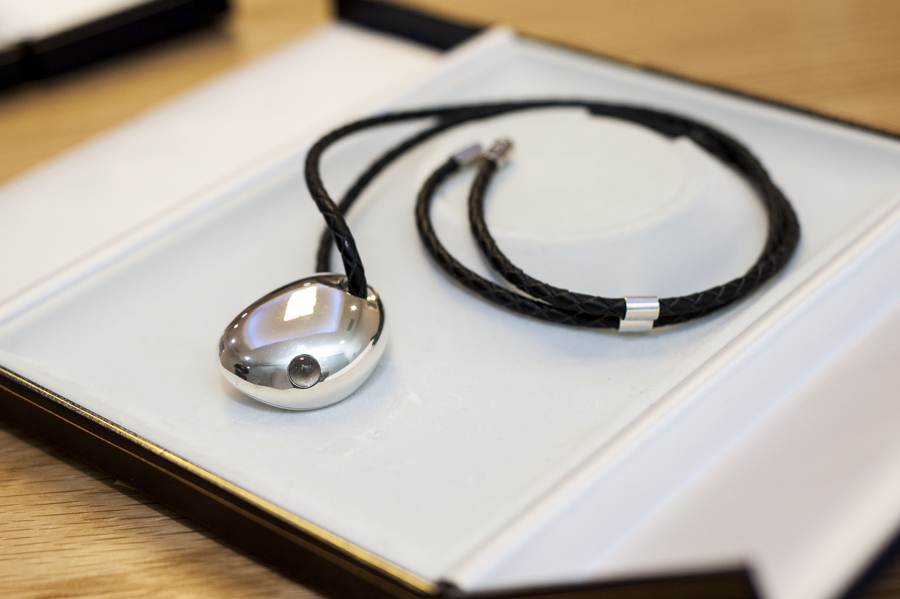
A recent collaboration between CSR (developers of Bluetooth Smart) and Cellini (boutique jewelry designers) has produced an elegant silver pendant that looks good enough to wear even when the battery dies.

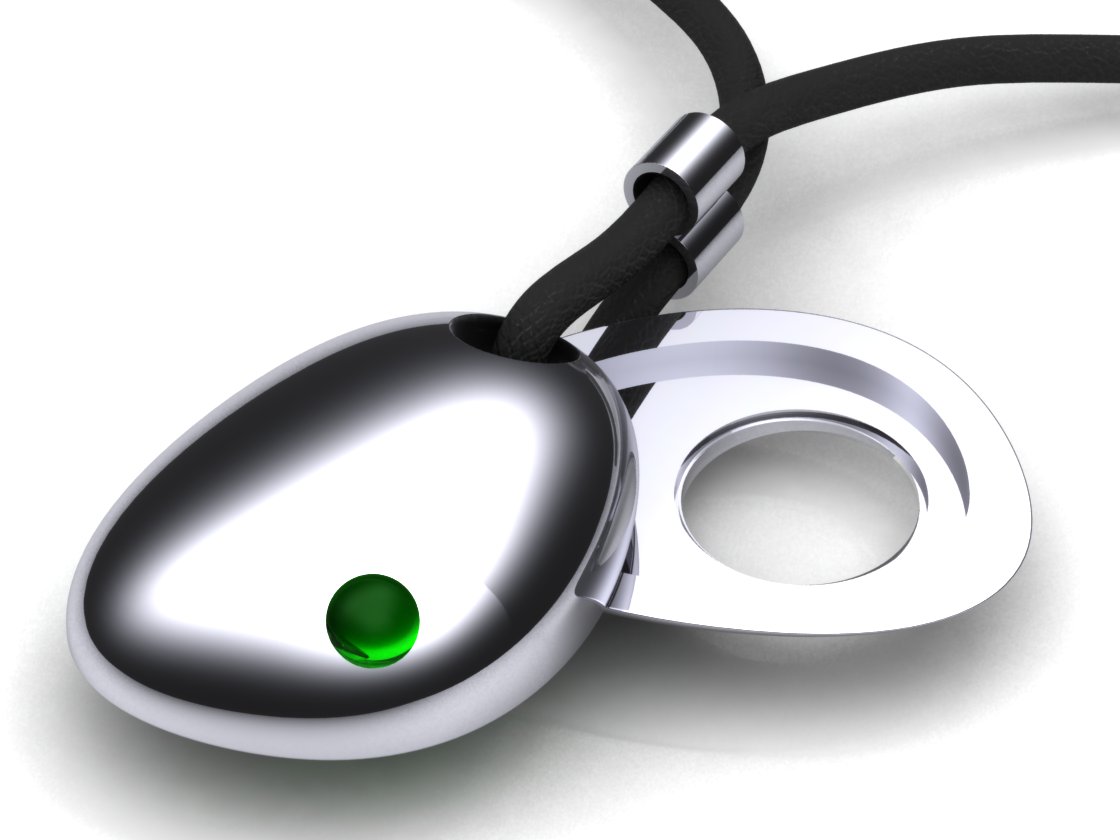
The pendant, still only a prototype, alerts the wearer to mobile phone events via a simple RGB LED display. The alert color, shown in green in the rendering below, is customizable by the user. CSR also mentions that the device could be extended to incorporate scent capsules to release a spray of perfume at certain times of the day, although this functionality hasn’t been incorporated into the first prototypes.

CSR will be releasing a development kit for the 1012 chip in the first quarter of 2014, so perhaps we can expect more beautiful objects with similar functionality from designers and makers?

To find out a little bit more about the pendant, check the development process video:

Bluetooth Smart Jewelry Pendant was last modified: January 12th, 2014 by Meg
January 12, 2014 0 comment
0 Facebook Twitter Google + Pinterest
DIY

Wearable Tech Kickstarter Roundup

written by Meg

For this roundup, I’ve picked five of what I think are the most interesting wearable tech campaigns on Kickstarter.

First up is Drumpants! Full disclosure, I recently joined the Drumpants team, so whereas I am biased, I still think it’s one of most fun wearable tech products on Kickstarter right now. Soft sensor pads are designed to velcro inside your pants (or other garment) so that when you start drumming on your pants, you trigger real music samples. The open API can be adapted to use for non-music functions like answering your phone or controlling a slideshow presentation:

Visit the Drumpants Kickstarter page.

Next: Zackees Turn Signal Gloves. Seasoned wearable tech followers will be wondering why it took so long for something like this to get on Kickstarter. That’s what I like about this project – its strength is in its simplicity, and the applications for not only cycling, but running, signaling, etc are broad. Plus, it’s great to see an independent designer taking these ideas to production level. I’m a backer on this one, and I’ll be curious to see if they offer a range of sizes in their initial run:

Visit the Turn Signal Gloves Kickstarter page.

Would-be lucid dreamers are pledging upwards of $150 (US) for the Aurora Dream Enhancing Headband. In a way, it’s another activity tracker, but it will appeal to a different user-group. I also like the way it can be used as an alarm clock based on the wearer’s natural sleep rhythms:

Visit the Aurora Kickstarter page.

The Climbax Climbing Wristbands are very specifically targeted at a single activity, rock climbing, which makes them interesting for a number of reasons. We’ve seen a slew of activity trackers coming out over the last few years, but most of them measure general movement. Anyone who knows a climber, knows how passionate they are about their sport, so it will be interesting to see if niche communities are willing to support this kind of specifically customized technology:

Visit the Climbax Kickstarter page.

The Silic T-shirt is proving popular, with over 2000 backers pledging upwards of $40 (US) for a t-shirt that “cleans itself”. What this means is that water-based spills are repelled by the fabric, so if you spill your drink on your shirt, it rolls right off. The fiber is described as a nano-coated polyester and the demonstrations online look really effective. The shirt reportedly remains stain-proof for up to ±80 washes, which you’ll only need to do for oil-based stains:

Visit the Silic Kickstarter page.

Wearable Tech Kickstarter Roundup was last modified: January 2nd, 2014 by Meg
January 2, 2014 0 comment
0 Facebook Twitter Google + Pinterest
Fashion

The Navigate Jacket by Wearable Experiments

written by Meg

Sydney-based Wearable Experiments (We:eX) describe themselves as a “socially driven wearable technology company”. With their latest offering, the Navigate jacket, they seem to be close to their mission of producing fashion tech with a functional design aesthetic.

The Navigate is a (via your cellphone) GPS-enabled jacket that many would wear even if the battery died, which is exactly what fashion tech should be. The beautifully made jacket has LEDs embedded into the white ribbon stripes on the sleeves that light up one-by-one the closer you are to your destination. Vibration motors in the shoulders tell you if you should turn left or right.

It’s great to see a design-led approach to wearable tech. Want one? It looks like the jackets are being offered bespoke only, by registering an interest on their website. And if you think you may have heard of Wearable Experiments before, you’re probably right. Fashioning Tech blogger Carly Whitaker included their Fundawear, long-distance intimate apparel in her April 2013 Wearable Tech Roundup.

The Navigate Jacket by Wearable Experiments was last modified: December 21st, 2013 by Meg
December 21, 2013 0 comment
0 Facebook Twitter Google + Pinterest
DIY

Wearable Tech Expo, Los Angeles, Dec 10-11, 2013

written by Meg

The Wearable Tech Expo was held at the Universal City Hilton in Los Angeles last week (December 10-11, 2013). Commercial players in the wearable tech field gathered to present, share, discuss and inspire. Smart watches were well-represented as were activity trackers and major tech companies such as Adidas, Vuzix, Plantronics, Intel and APX Labs.

Keynote by Adidas (photo: TMC)

Because this was an wearable tech industry conference, most of the devices featured were those that can be worn on the body, rather than textile-integrated solutions. This meant that for me, coming from a fashion, art and maker perspective, it was a great opportunity to expand my views on the field in general. For example, if you’re from an arts background, you might not have thought much about wearable devices used in warehouse management. And who can blame you? It turns out that logistics technology can actually be pretty cool. I know, who knew?

Along-side the scheduled presentations, there were vendor tables set up for participants to demonstrate their products. This included Clothing+, Pivothead, PLT Labs and Sensoplex, to name just a few.

Due to the commercial nature of the conference, forecasting was a hot topic and there was a lot of discussion around body “real estate”. Would it be the eye, the ear or the torso that companies would be fighting over? Despite (or perhaps because of) the number of really smart people attending this conference, no one seemed keen to throw their cards on the table and pick one. Personally, I don’t see the need to choose, as each part of the body already has its own properties and functions that lend themselves to certain features and forms.

There was also much discussion over which category of wearable tech would win out between fitness, health, entertainment, etc. Again, I don’t see the need to choose and see these as separate categories – each with its own merits and opportunities.

Panel discussion about creating a WT business from the ground up with Monisha Perkash (LUMO Body Tech), Robert Rueckert (Intel Capital), David Stern (Motion Technology Partners), Tim Miller (451 Research) and moderated by Rich Tehrani from TMC (photo: TMC)

One of the best parts of the conference for me was the demo sessions. My personal favorites were LumoBack (posture-correcting belts), Melon (EEG-analyzing headbands), Hexoskin (performance-tracking shirts) and Clothing+ (clothing with beautifully-manufactured conductive areas for use with sensor devices).

By far one of the biggest surprises in the demo sessions for me was PLT Labs. The Labs are an initiative by Plantronics, a manufacturer of bluetooth earpieces. It turns out they have a long legacy in wearable tech, including the transmission of Niel Armstrong’s famous words “one small step for man…” in 1969! Earlier in 2013 they opened PLT Labs as a way to both foster innovation and reach out to the maker and hacker communities. They’ve already been involved in Hackathons across the US and seem to be having a great time both teaching and learning. The developer version of their earpieces have super-responsive accelerometers, gyroscopes and magnetometers built in, and hackers have been attaching them to all parts of their bodies to come up with new ideas. I have to admit, I didn’t expect to come across a company like this getting so excited to be a part of the maker community and I’d love to see other brands take a leaf out of Plantronics’ book.

PLT Labs demo a hackathon-produced headbanging music controller (photo: TMC)

Ok, so on to the fashion: Syuzi’s talk on the relationship between fashion and wearable technology stirred things up a little. With so many of the products and companies with their roots firmly in engineering and hardware, the idea of introducing values and practices from the fashion world seemed a bit alien to many attendees. However, judging by the reactions both on Twitter and in person after her talk, I think this part of the industry could be described as “fashion-curious”, which is a good sign!

One of the final presentations was by Brent Heyning of ToyShoppe Systems. This was billed as “Wearable Technology in the Entertainment Industry” and was aptly entertaining! ToyShoppe’s impressive portfolio includes creating props and costumes for film and TV, many of them wearable tech. Also on stage were Brian Walsh and Mike Elizalde from Spectral Motion Effects, whose work had many jaws dropping. Brent had also invited collaborator Anouk Wipprecht to show what can be done with fashion, tech and imagination, plus Heather Vescent Schlegle (Purple Tornado), a financial futurist who is working on wearable currency concepts. Her inclusion in the line-up shows how wearable tech only gets more exciting when people from different backgrounds get involved.

Wearable Tech Expo, Los Angeles, Dec 10-11, 2013 was last modified: December 18th, 2013 by Meg
December 18, 2013 0 comment
0 Facebook Twitter Google + Pinterest
  • 1
  • 2
  • 3
  • Facebook
  • Twitter
  • Linkedin
  • Youtube
  • Email
Footer Logo

© 2016 Fashionging Tech. All rights reserved.


Back To Top